n this captivating YouTube video, the creator embarks on a raw, unfiltered journey deep into the forest — alone, with almost no modern comforts, relying instead on the timeless skills of bushcraft. The video, titled “Bushcraft Survival – Solo Overnight in the Forest with Minimal Gear,” offers viewers a stunning demonstration of resourcefulness, resilience, and self-reliance.
From the very beginning, the wilderness feels alive — tall trees sway gently in the breeze, the forest floor is textured with leaves and moss, and even the light has a filtered, greenish hue that hints at the isolation of this remote camp. With nothing more than a small pack of essentials and nature itself as his companion, the solo camper sets out to build a survival shelter, make fire, and cook in the wild, all while embracing the solitude of an overnight stay.
Setting Up Camp: Building a Primitive Shelter
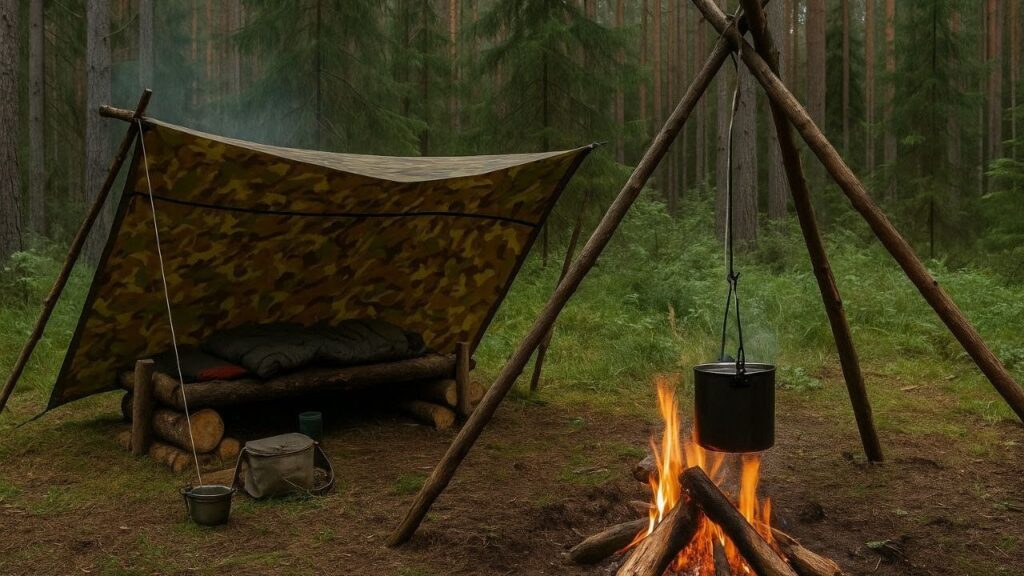
The first phase of the overnight starts with shelter construction. Without a tent, the camper must use forest materials and his bushcraft knowledge to create a safe, weather-resistant hideaway. He identifies trees to lean branches against, finds suitable fallen wood, and weaves together a frame that will hold its own when night comes. What’s remarkable is how efficiently he uses what’s around him: branches, bark, and foliage become structural components, while his skills shape them into something functional.
This primitive shelter isn’t just a backdrop — it’s a core demonstration of survival skills. The way he places supports, angles them correctly, and insulates the structure shows a deep familiarity with traditional bushcraft techniques. It’s not a luxury build; it’s practical, robust, and beautifully in sync with nature.
Fire Craft: Igniting the Wild
Once the shelter is underway, attention turns to fire. Instead of using ready-made fire starters or modern lighters, he relies on tried-and-true techniques. He collects tinder, dry wood, and kindling, carefully preparing each piece so that a spark can catch. The process is deliberate: scraping, shaving, and arranging wood to maximize airflow and create an efficient burn.
After striking a spark (likely with a ferro rod or flint), the flame gradually grows. He nurtures it, adds wood, and builds it into a small campfire that will serve for cooking, warmth, and morale. The crackling fire, set against the backdrop of the forest, creates one of the most primal and peaceful scenes in the video.
Cooking: Meals from Minimalism
With a stable fire, he proceeds to cook using minimal gear — perhaps a small pot, a simple pan, or even improvised cookware from found materials. The food is humble: maybe foraged items, dried food, or something carried in his light pack. Yet, the act of cooking is not just about nourishment; it’s a testament to how survival doesn’t require high-tech gear. Clever positioning of the pot near embers, thoughtful use of coals, and patience bring a warm meal to life.
There’s a satisfying moment when steam rises, food bubbles, and he attends to his makeshift kitchen with calm determination. The simplicity of the meal reinforces the video’s message: survival is as much about mindset and skill as it is about the tools you bring.
Solitude & Reflection
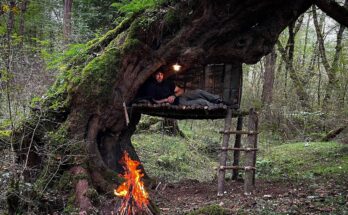
Perhaps the most compelling part of the video is its quiet moments. As evening falls, the forest quiets down, and the camper retreats to his shelter. He lies on a simple bed (maybe a roll mat or something more primitive), listening to the sounds of the forest — wind, distant branches, perhaps an owl or two. These moments of solitude are not just scenic; they are deeply reflective. He’s alone, but not lonely — he’s present, grounded, and in tune with his surroundings.
The video doesn’t shy away from the challenges: there may be discomfort, the cold of the night, or the mental weight of being alone. But it also captures the profound peace that comes from being self-sufficient in the wild. The viewer is invited to experience not just a survival exercise, but a meditation in nature.
Morning & Breakdown
When morning arrives, he wakes up to soft light filtering through the trees. He carefully dismantles part of his camp or tidies up, ensuring he leaves no trace behind. He tends to the fire one last time — perhaps to boil water for a morning drink or to warm himself before packing up. The breakdown of camp is as deliberate as the setup: every piece of wood is accounted for, every ember is extinguished, and the forest remains as if he were never there.
In the final scenes, he packs his gear, slings his bag, and takes a last look around. The forest, silent and calm, stands as a testament to his ability to navigate and survive with minimal equipment. His journey ends not with a grand flourish, but with a quiet respect for nature and for the skills that allowed him to stay.
Why This Video Is Powerful
- Authenticity: This is not glamorized camping. It’s pure bushcraft survival — raw, real, and real-world applicable.
- Minimalism: By relying on minimal gear, the video underscores how survival doesn’t demand expensive or bulky equipment.
- Skill Demonstration: Building a shelter, making fire, cooking — all done with traditional, hands-on techniques.
- Mental Strength: The solo aspect highlights mental resilience, self-reliance, and the capacity to embrace solitude.
- Inspiration: For viewers interested in bushcraft, survival, or minimalist outdoor living, the video is deeply motivating and educational.