In the heart of a remote, wild forest in the north, a rugged and resourceful man has built something extraordinary—a dugout home carved deep into the earth, designed to weather the harsh winter that has now arrived. This isn’t just a survival shelter; it’s a crafted refuge, an intimate connection to nature, and a testament to human resilience and craftsmanship.
1. Introduction to the Dugout Life
The video opens a window into an off-grid lifestyle where modern conveniences fade, and nature’s raw materials become both challenge and comfort. As daylight hours wane in the northern wilderness, this man’s project takes on a new urgency: preparing his underground home for the cold season. The structure isn’t merely practical—it embodies a deeply personal journey of building a place to call home in the forest.
2. The Process of Building
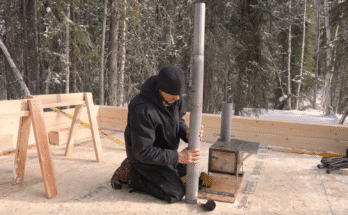
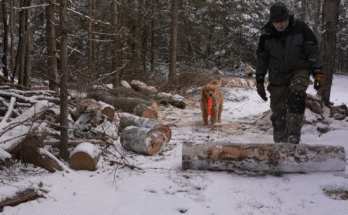
In the video, we see him working with fallen aspen trees to construct the floor of a new bathhouse—an essential component for maintaining warmth and hygiene through the winter months. Timber gathered from the forest provides both structural support and insulation. His approach is methodical and hands-on; he uses hand tools and raw materials, letting the forest itself supply the building blocks for survival.
Because daylight is so short now, he often works late into the dim hours. This is no easy feat—the northern winter gives very little forgiving light. But he remains undeterred, driven by a deep purpose: to create a dugout that is not just a shelter, but a sanctuary.
3. Architecture and Design
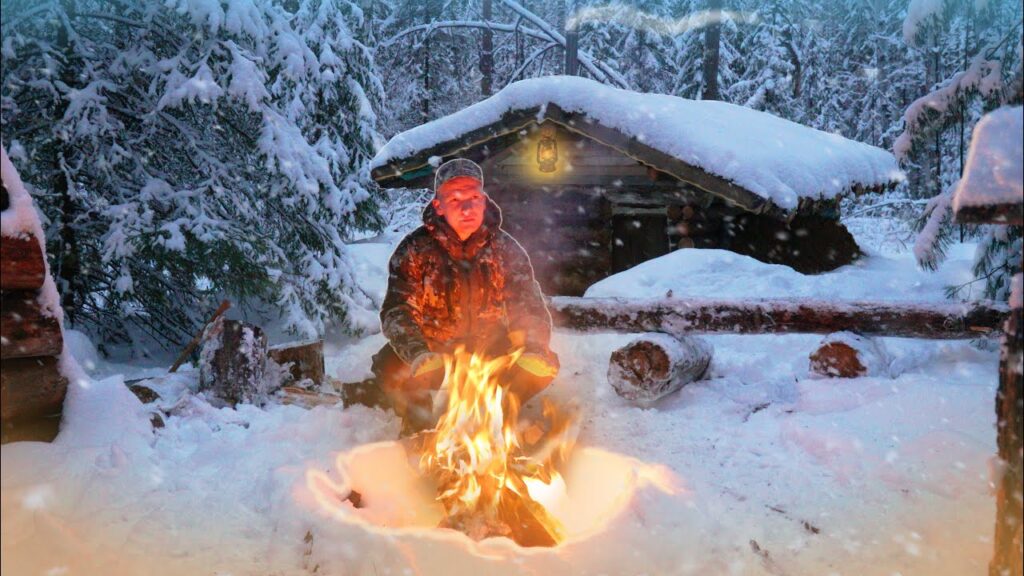
The dugout is more than a hole in the ground. It’s carefully designed to maximize warmth and stability. Earth-sheltered homes like this use the surrounding soil as a natural insulator, helping to buffer extreme cold on the surface. The roof is likely covered and camouflaged with natural materials to protect it from snow and wind. Inside, the structure is reinforced with logs, creating a sturdy frame that can stand up to the weight of snow overhead.
In his description and silent work, there’s a humility and respect for the forest. Every log, plank, and beam is hand-selected; every cut is considered. He builds in harmony with the land—nothing feels forced or artificial.
4. Daily Life in Winter
With winter setting in, daily routines shift. The priorities become warmth, light, and conserving resources. The bathhouse floor build is especially smart: a place to wash and warm up is indispensable when temperatures plummet. He must also think about how to spark and sustain a fire without endangering his earthen roof. Presumably, he’s built a safe hearth or stove that vents properly to avoid carbon monoxide buildup—critical in a dugout environment.
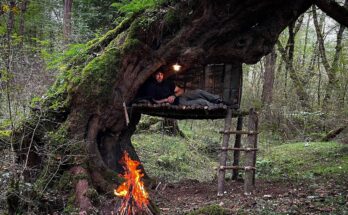
Interior life in a dugout like this would be simple yet profoundly fulfilling: a bed carved from wood, perhaps lined with insulating moss or bark; shelves made from branches; a small workbench; and a hearth glow to chase off the cold. The outside world is quiet but alive—the snow-laden forest, the creak of branches, and the distant calls of winter birds.
5. Philosophical Reflection
This man’s decision to live in a dugout is not just survivalism. It’s a philosophical choice, a return to basics. By building with his own hands, he’s rejecting modern dependence and affirming an older way of life—one where self-reliance, patience, and respect for nature are paramount. His project is a meditation on solitude, perseverance, and harmony with the land.
The forest, in turn, rewards him: stability, shelter, and a profound kind of freedom. In contrast to many modern homes, his dugout is not a fortress—it’s an act of trust in the forest, and of submission to its rhythms.
6. Challenges and Risks
Living underground in a cold climate is not without risks. Water infiltration, especially from snow melt, could threaten the trench walls or roof if not well designed. Without careful ventilation, smoke from a fire could stagnate, posing a health risk. And while the earth provides insulation, it also exerts pressure on structural supports, so his logs must be strong and correctly placed.
Moreover, maintaining a dugout takes constant effort. He likely needs to check for leaks, reinforce weak spots, and continuously manage moisture. But these challenges do not deter him. Instead, they become part of his daily rhythm and commitment.
7. Community and Inspiration
Although he lives deeply in the forest, he is not entirely alone in spirit. His wife has a linked channel, showing that this life touches more than just his own journey. The video’s description also invites viewers into a world that many only dream of: bushcraft, self-built shelters, and a quiet, purposeful existence far away from urban noise.
By sharing his life, he inspires others who long for a simpler, grounded way of being. His dugout is a beacon: a demonstration that with enough will, skill, and respect for nature, it’s possible to build something lasting and deeply meaningful.
8. Conclusion
This northern dugout, now settling into winter, stands as a powerful symbol. It is not just a shelter, but a statement: of independence, patience, and the beauty of living close to the earth. In the face of short days, cold nights, and deep snow, this man’s forest home is a place of warmth, peace, and hard-earned fulfillment.
For anyone visiting the website, this article invites them to reflect on what it means to build with purpose—to create a home not for show, but for life. His dugout is more than a survival tactic; it’s a philosophy in wood and earth, offering a quiet invitation to reimagine our relationship with the wilderness—and with ourselves.