In this second episode of the log‐cabin build series, the creator takes us deeper into the essential and foundational work of manually peeling the logs that will form the walls of the cabin. With the entry titled “I Started Peeling Logs for My Log Cabin I EP 2”, we immediately see that this is serious, hands‐on work — not just the flashy milestones of raising walls or installing windows, but the long, methodical process of preparing each log for use.
Why peeling logs matters
Before logs get stacked, notched, and sealed into a cabin’s structure, they often must be stripped of bark and shaped appropriately. Leaving bark on logs increases the risk of insect infestation, rot, and uneven settlement. One article on building off‐grid log cabins notes: “Peeling logs is one of the hardest chores you’ll ever do… You can’t leave the bark on a log if you want your cabin to be insect‐proof and last more than a few years.” Outdoor Hub+1 By dedicating the video to this process, the builder shows an understanding that good structure starts with good log preparation.
The process shown in this episode
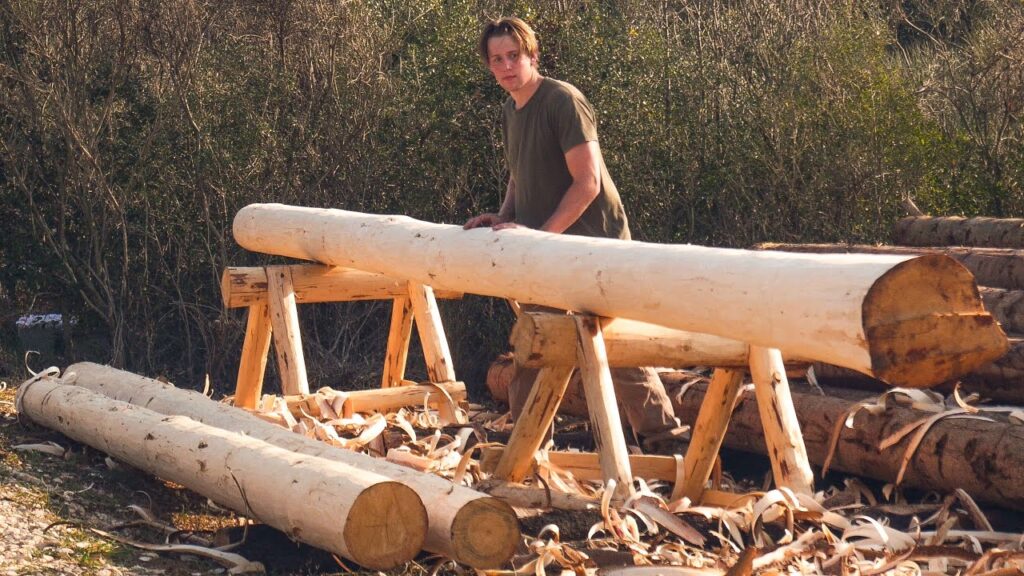
In the video, the builder uses a drawknife (a hand tool designed to shave bark and smooth the log surface) to strip the first half of the logs for the cabin. In the description we read:
“In this video I started peeling with the draw knife the first half of the logs for my log cabin build!” youtube.com
The footage shows real-world conditions: rough logs, tool marks, physical exertion, and the steady rhythm of the drawknife sliding along the trunk. The builder isn’t relying on heavy machinery or large crews; rather, it’s a solo (or highly self‐reliant) approach where craftsmanship and persistence are key.
Why this approach is noteworthy
- Traditional tools & methods — Rather than using large industrial equipment to debark or plane logs, the video leans into hand tools and the slower pace of manual woodworking. This gives the project a more personal, authentic feel, and likely increases the sense of satisfaction when the cabin finally stands.
- Learning as you go — The description reflects that the builder’s father was a carpenter and taught woodworking from a young age, yet log-cabin building is new territory. The statement “I have no experience with building a log cabin, so I’m learning everything as I go” is part of the narrative. youtube.com That learning process is part of the appeal.
- Off-grid & self-sufficient mindset — The builder writes that he chose to build in a remote location and uses hand tools “because they are my favourite… you’re able to work off-grid, the entire set of tools you need can fit in one bag…” youtube.com It’s a lifestyle decision as much as a building decision.
- Physical labour that many overlook — Most first‐time cabin viewers skip ahead to the glowing log walls or finished interior. This video stops at the grunt work—the peeling of bark and shaping logs—which is the invisible portion of the build, yet critical.
What you’ll learn/observe
- The rhythm and technique of using a drawknife on full‐sized logs: how the bark yields, how tool marks look, how the builder positions himself.
- The importance of selecting and preparing the right logs: the video implicitly shows that not all logs are equal, and peeling helps reveal defects or knots.
- The time investment of manual log prep: watching the footage gives a clear sense that this step takes many hours, even for an experienced hand tool user.
- The mindset of the builder: gratitude for land, for tools, for being able to pursue this project; also the solo‐operator editing and filming themselves. The description mentions “There is no one behind the camera, so I do all the filming and editing myself.” youtube.com
Why this episode matters in the bigger build journey
In a log-cabin project, the “peeling” stage is akin to the foundation—less visible in the final product, but absolutely essential. If logs aren’t properly prepared, issues like rot, settlement, insect damage, or uneven walls can arise later. By focusing an episode just on peeling, the builder is laying a strong foundation for what follows.
Furthermore, for website viewers or aspiring cabin-builders, this episode can serve as an instructional and motivational piece. It’s realistic, showing that big projects begin with labour, tools, and time—not always glamour. If one watches hoping for instant builds or dramatic raises, they may be disappointed. But watch expecting work, and you’ll appreciate the sincerity.
Tips & takeaways if you’re building your own
- Have the right tool: a sharp drawknife, properly maintained, makes a major difference. Some blog posts emphasise the need to sharpen and maintain the blade. video+1
- Peel early: Some builders recommend stripping bark as soon as logs are felled or as early as possible, to minimize insect or fungal penetration. Reddit+1
- Expect endurance: Plan for many hours of repetitive labour. It’s not glamorous, but the result will stand the test of time.
- Documentation counts: The fact that the builder films and edits himself gives future viewers context and relatability. If you’re doing your own build, consider documenting your process—it helps you reflect and others learn.
- Connection to the land: The narrative emphasises living simply, spending less money, and having more time. If that resonates with you, being realistic about the labour helps you embrace the journey rather than chase shortcuts.